

Preparing the 3D story…
The interactive 3D view is unavailable
You can still explore the complete process through the images and text below.
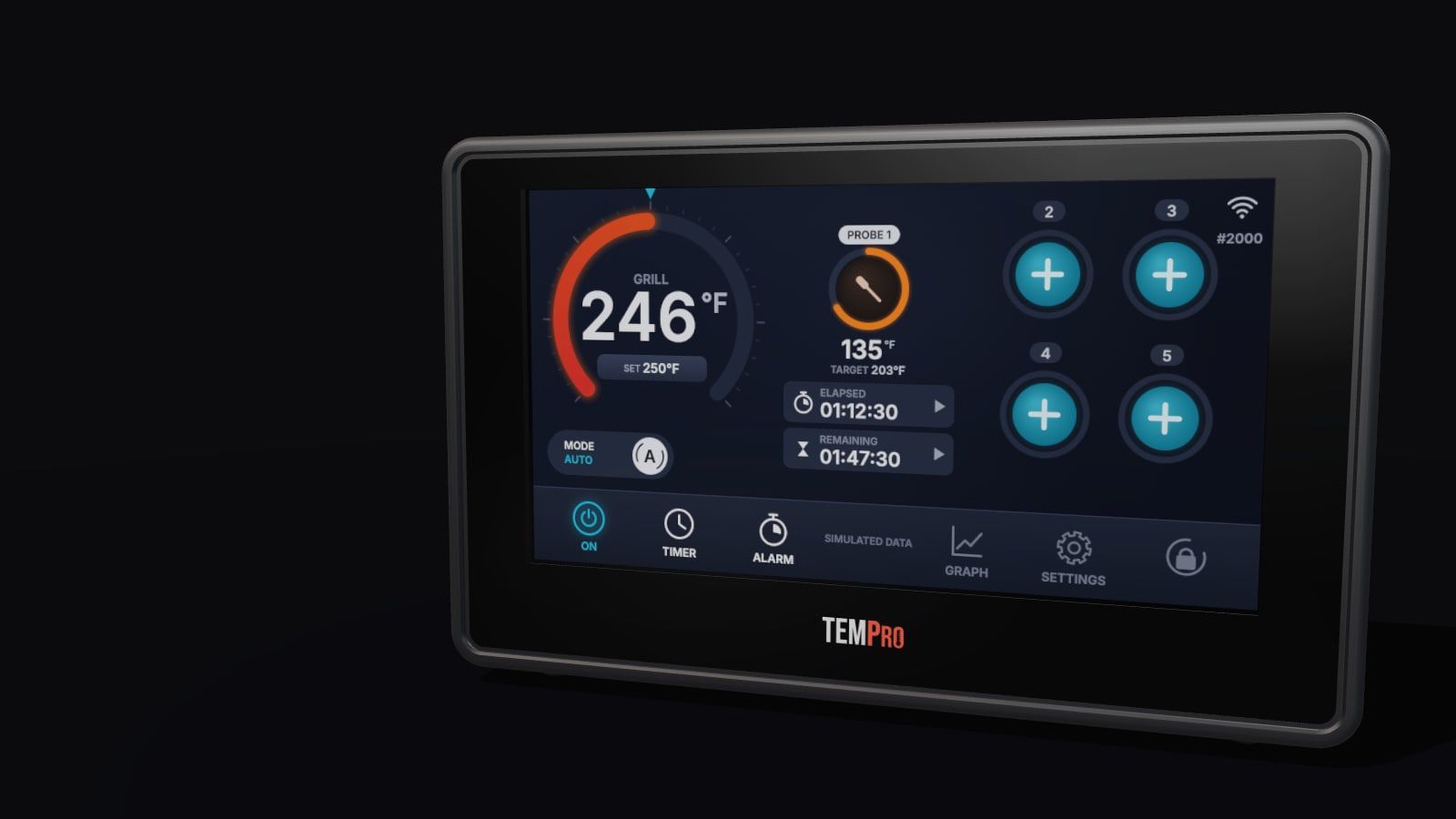
Connected product engineering
Hardware. Software. The whole product.
Follow a product from the first conversation to OEM handoff.
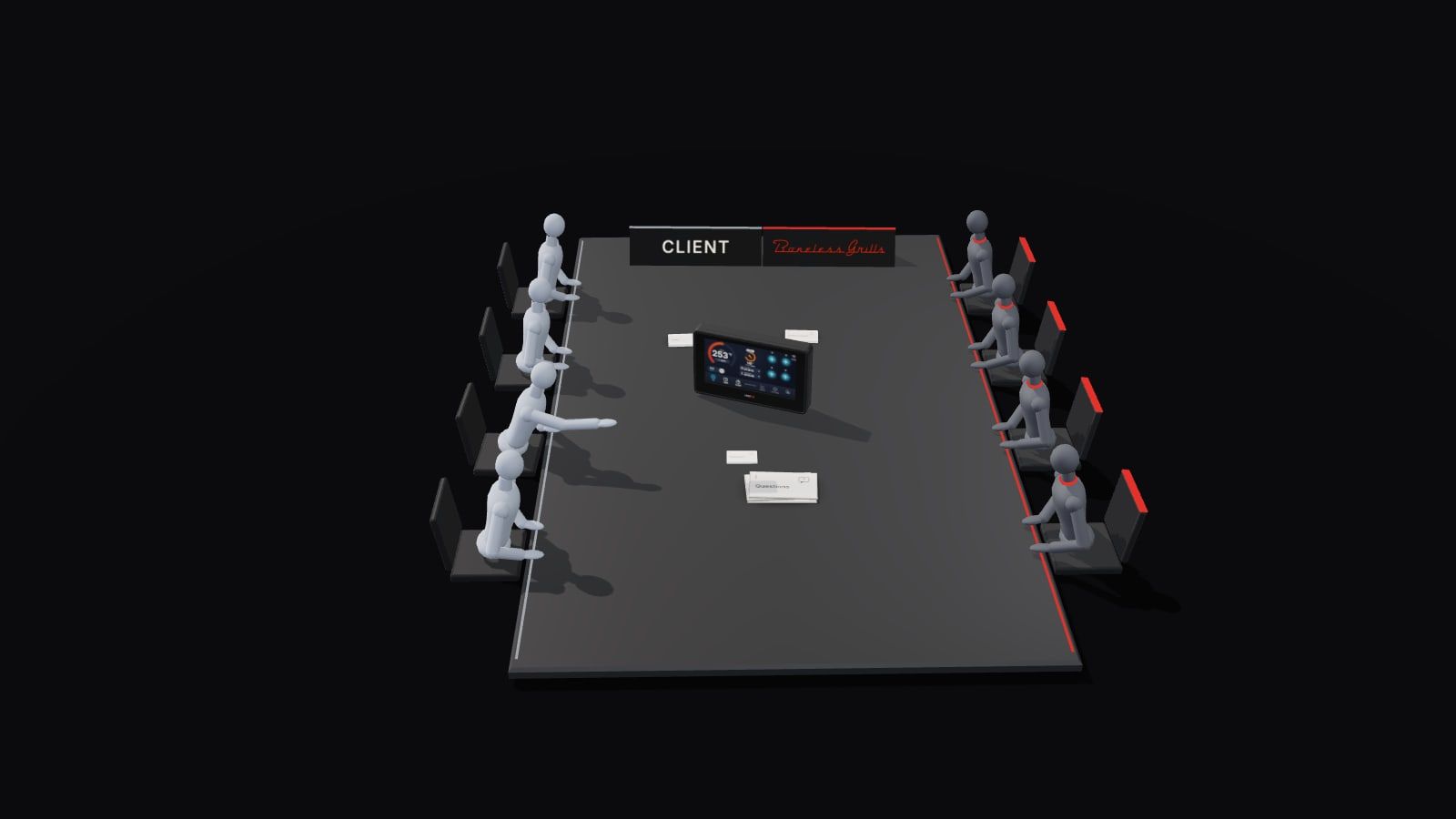
02 / Discovery
Start with the right questions.
Define the product, its users, its environment, and what success means.
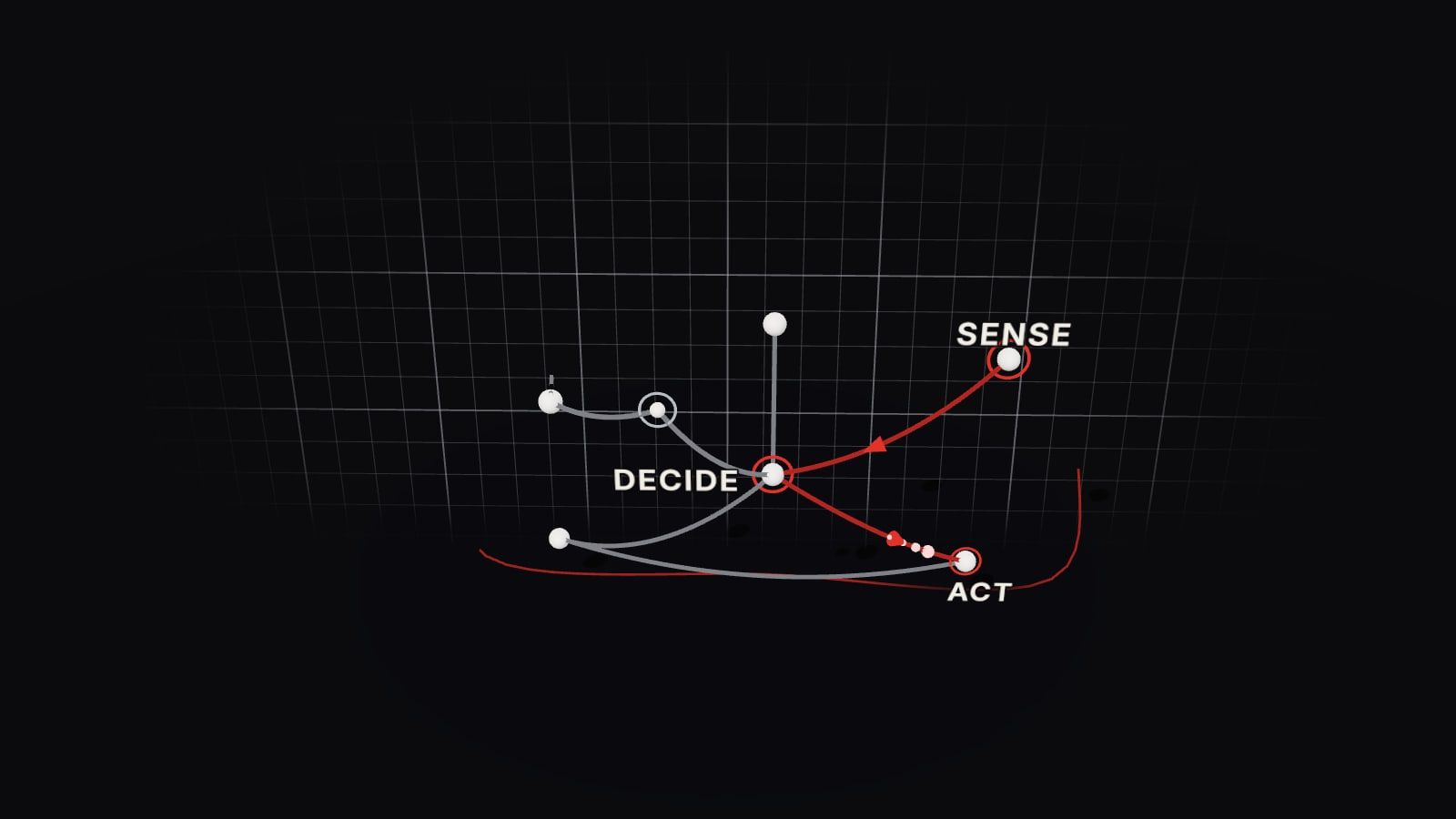
03 / System architecture
Decide how the product should behave.
Bring functions, electronics, firmware, and control logic into one architecture.
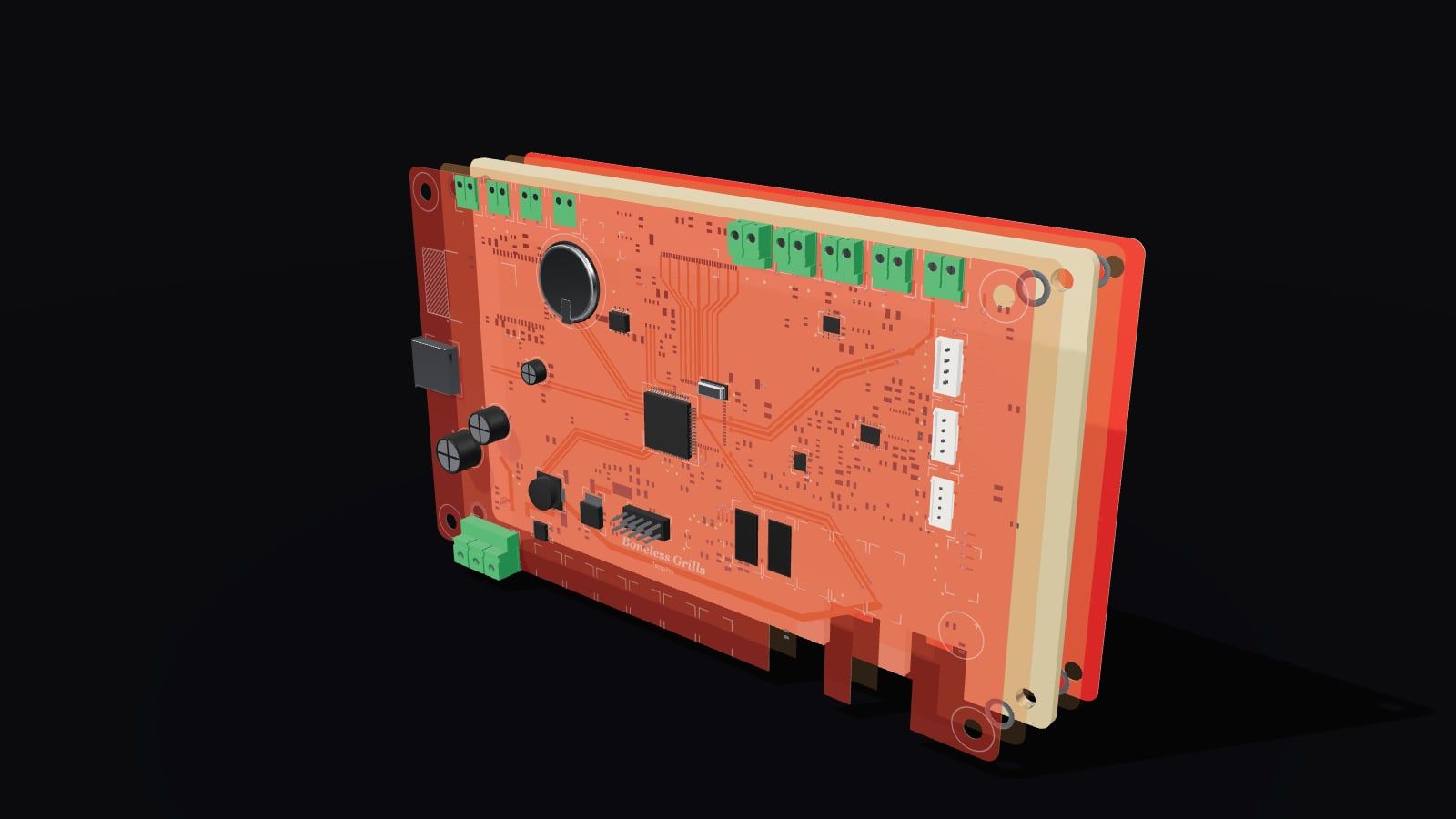
04 / Electronics and PCB
Give the architecture a physical form.
From component placement and signal paths to a board designed for integration.
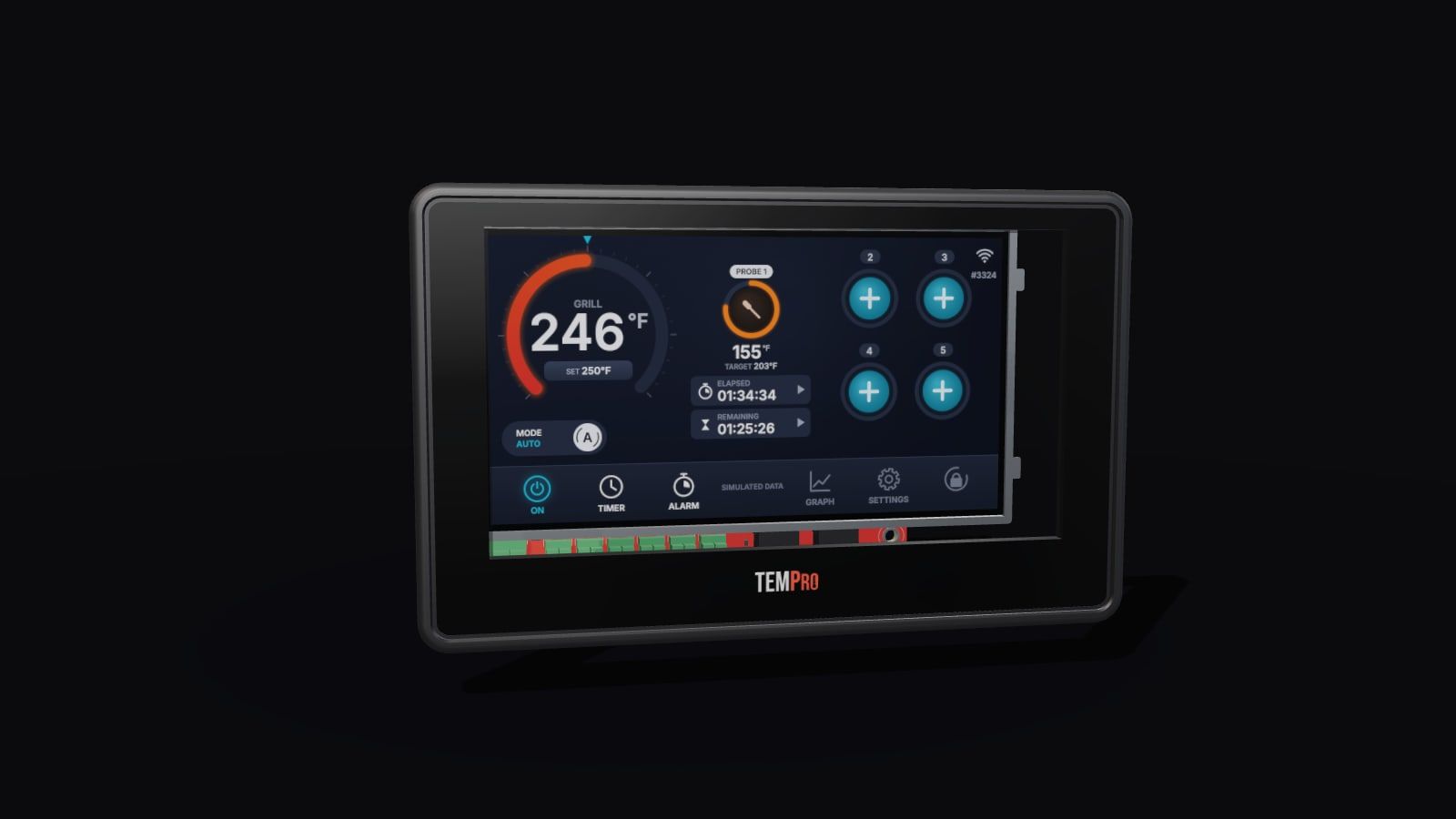
05 / Product interface
Make the system clear to its user.
Turn device states and controls into a coherent on-product experience.
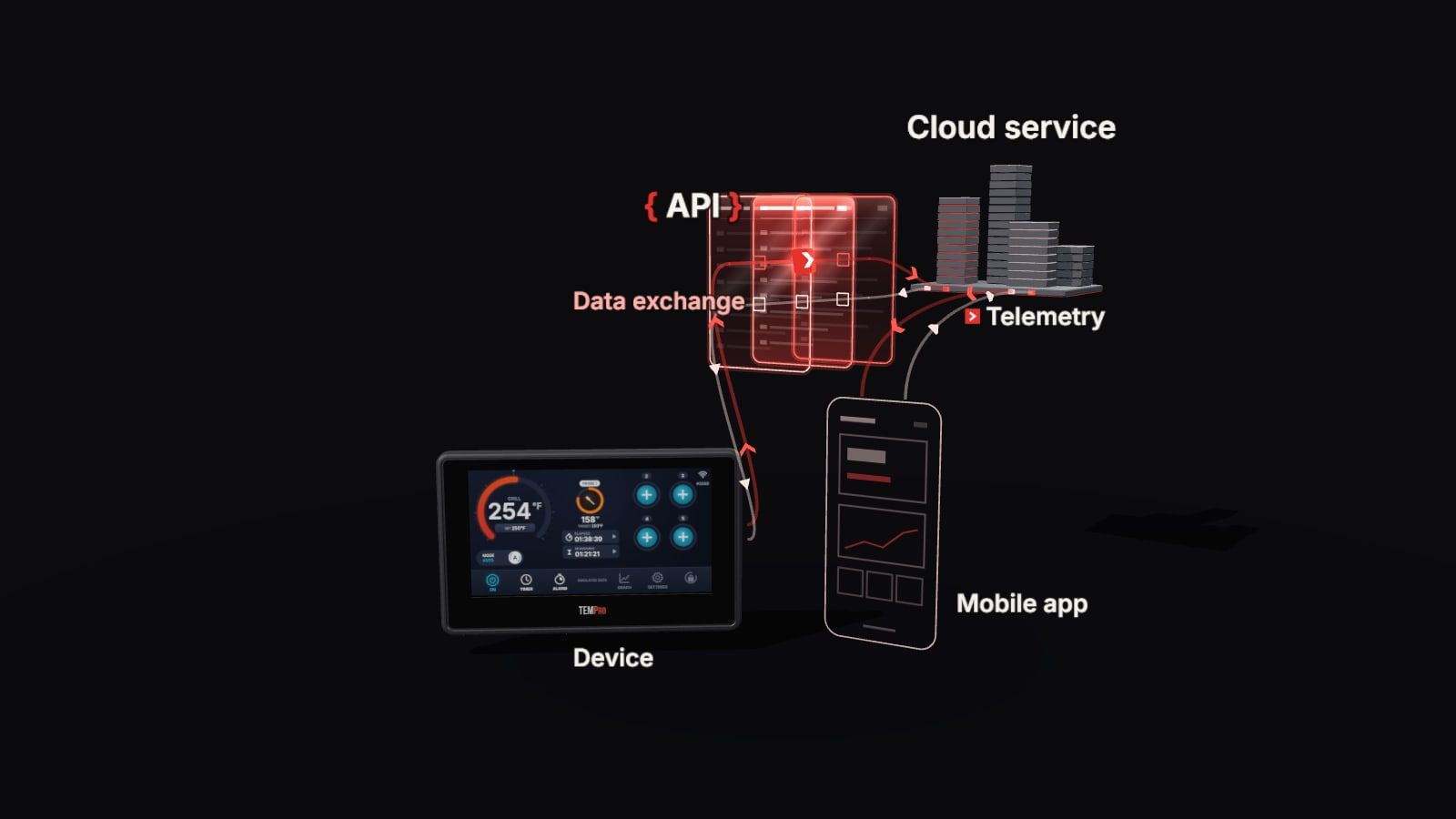
06 / Cloud and API
Build the connection behind the experience.
Define how device information moves through APIs and cloud services.
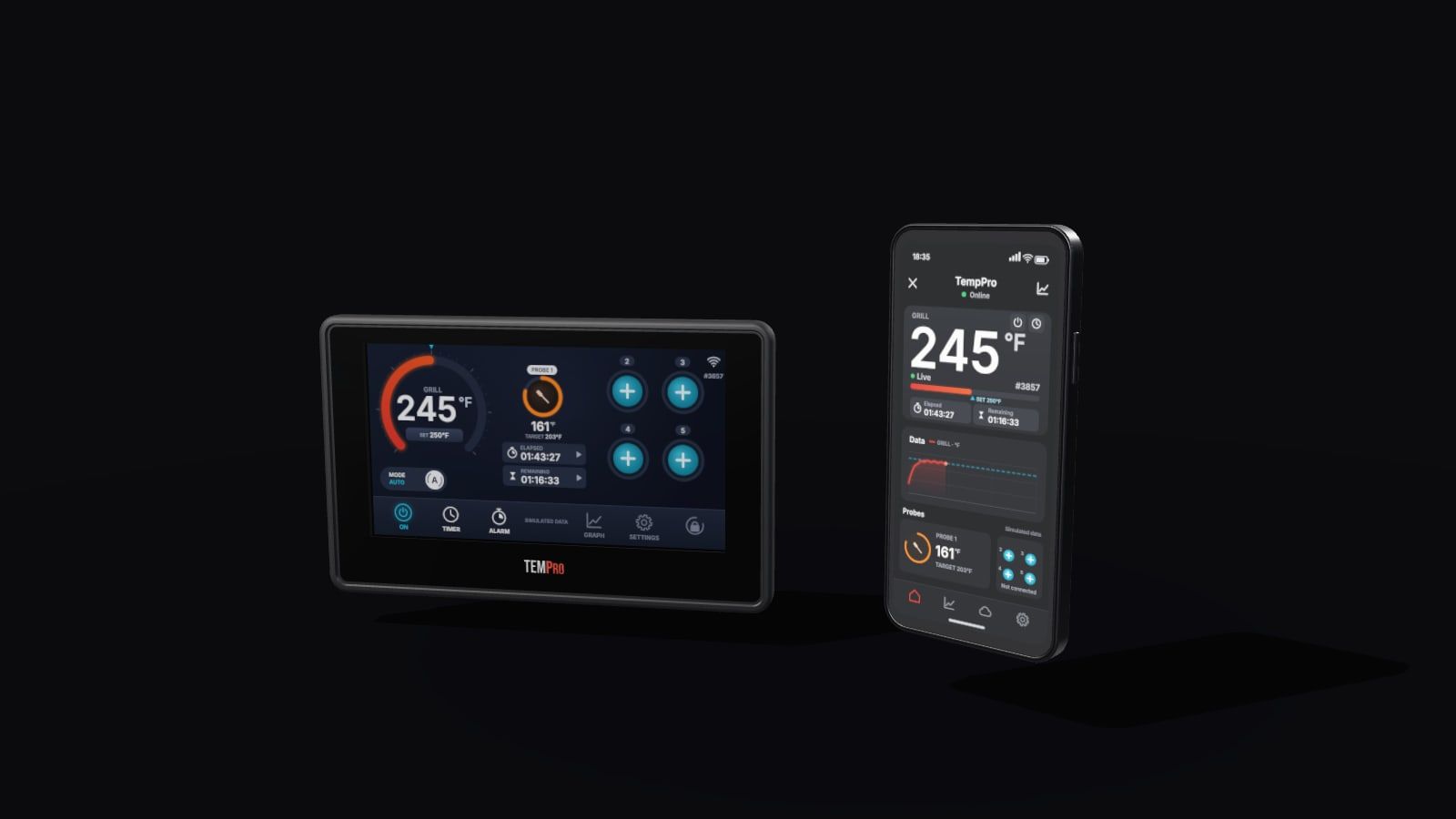
07 / Mobile experience
The same product. A wider experience.
Bring device information and useful workflows into the user's hand.
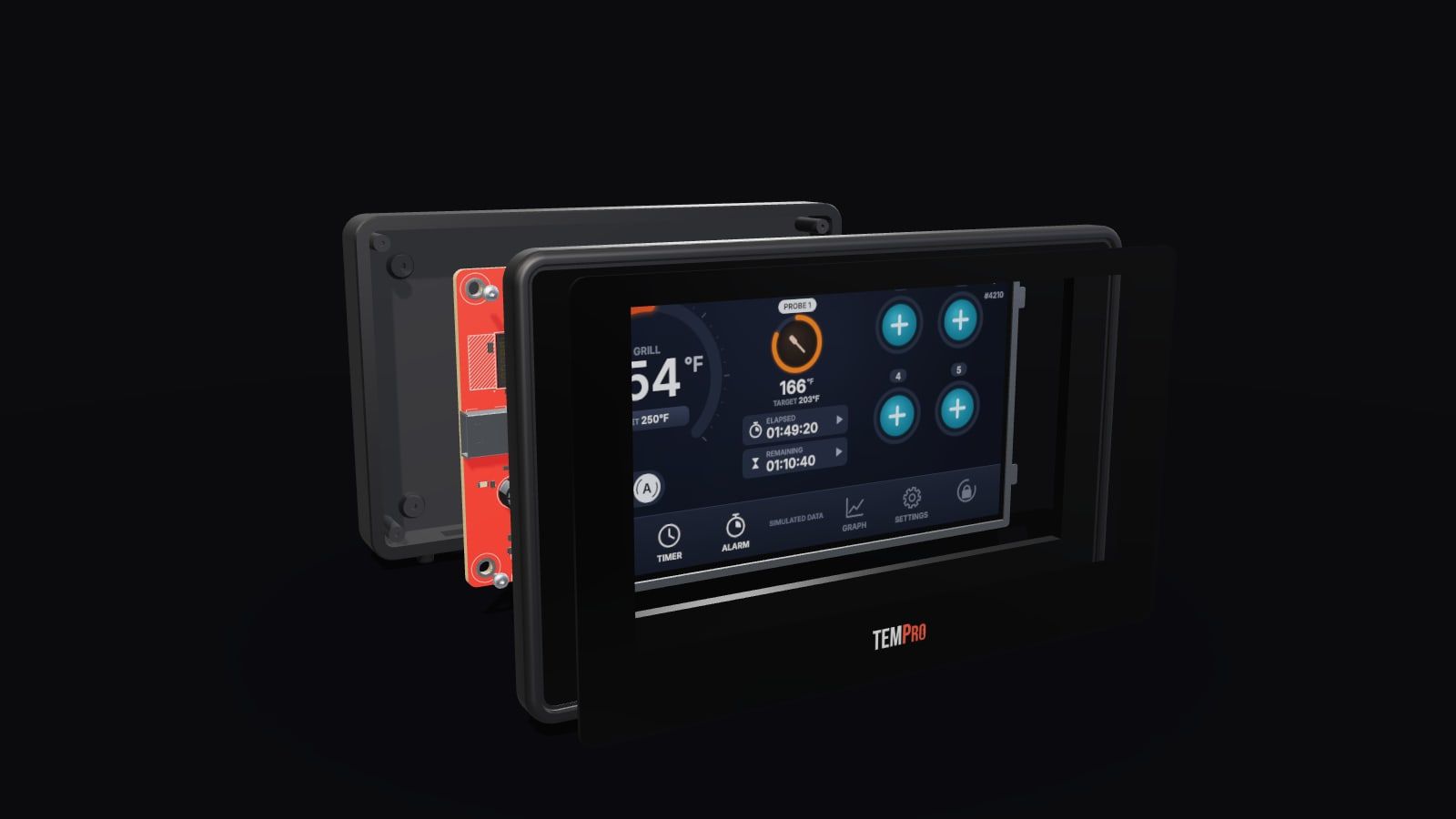
08 / Product integration
One product. Every layer connected.
Bring the electronics, display, connections, and enclosure together.
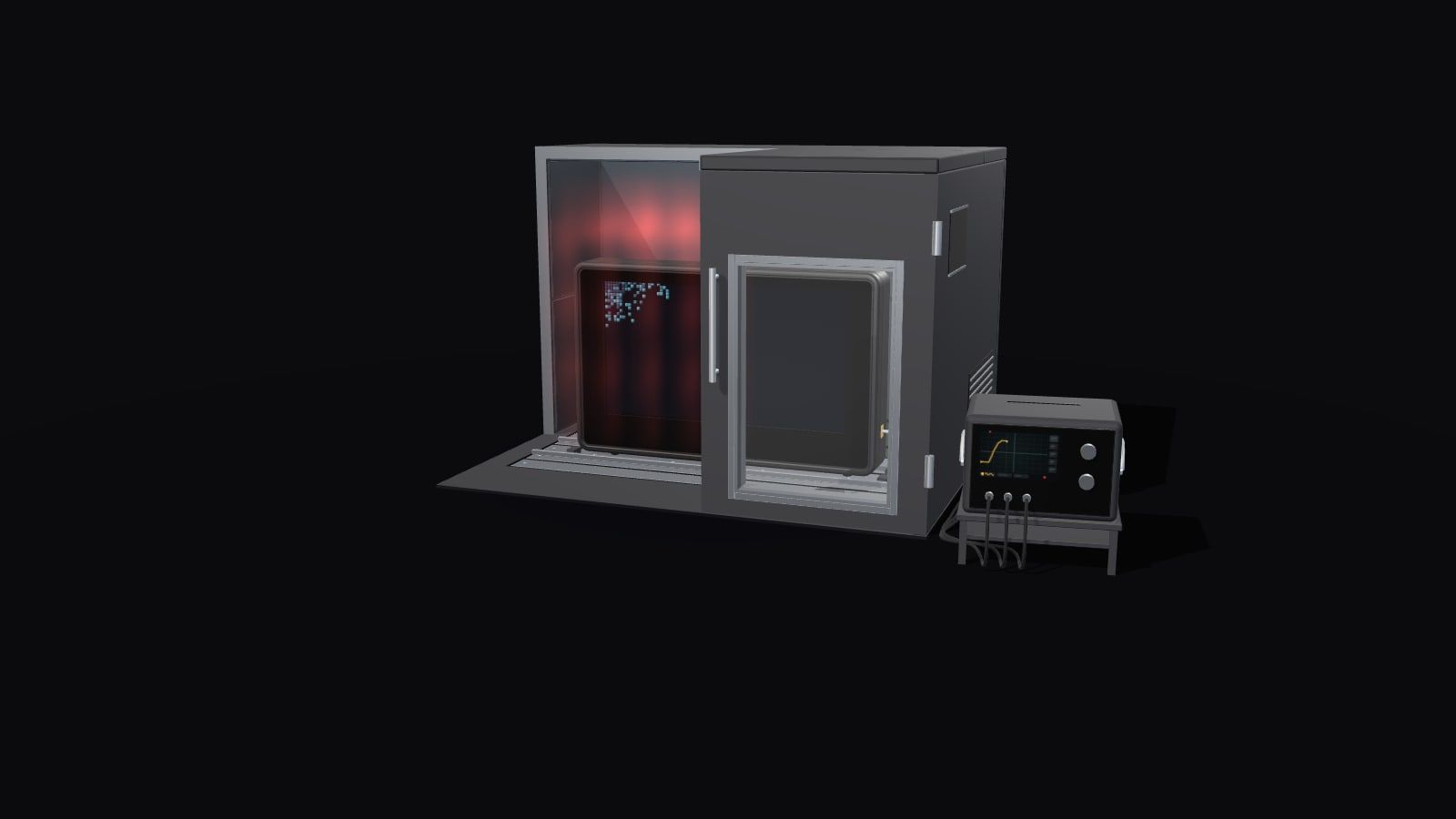
09 / Physical testing
Test the product beyond the screen.
Examine physical integration, thermal behavior, and functional response.
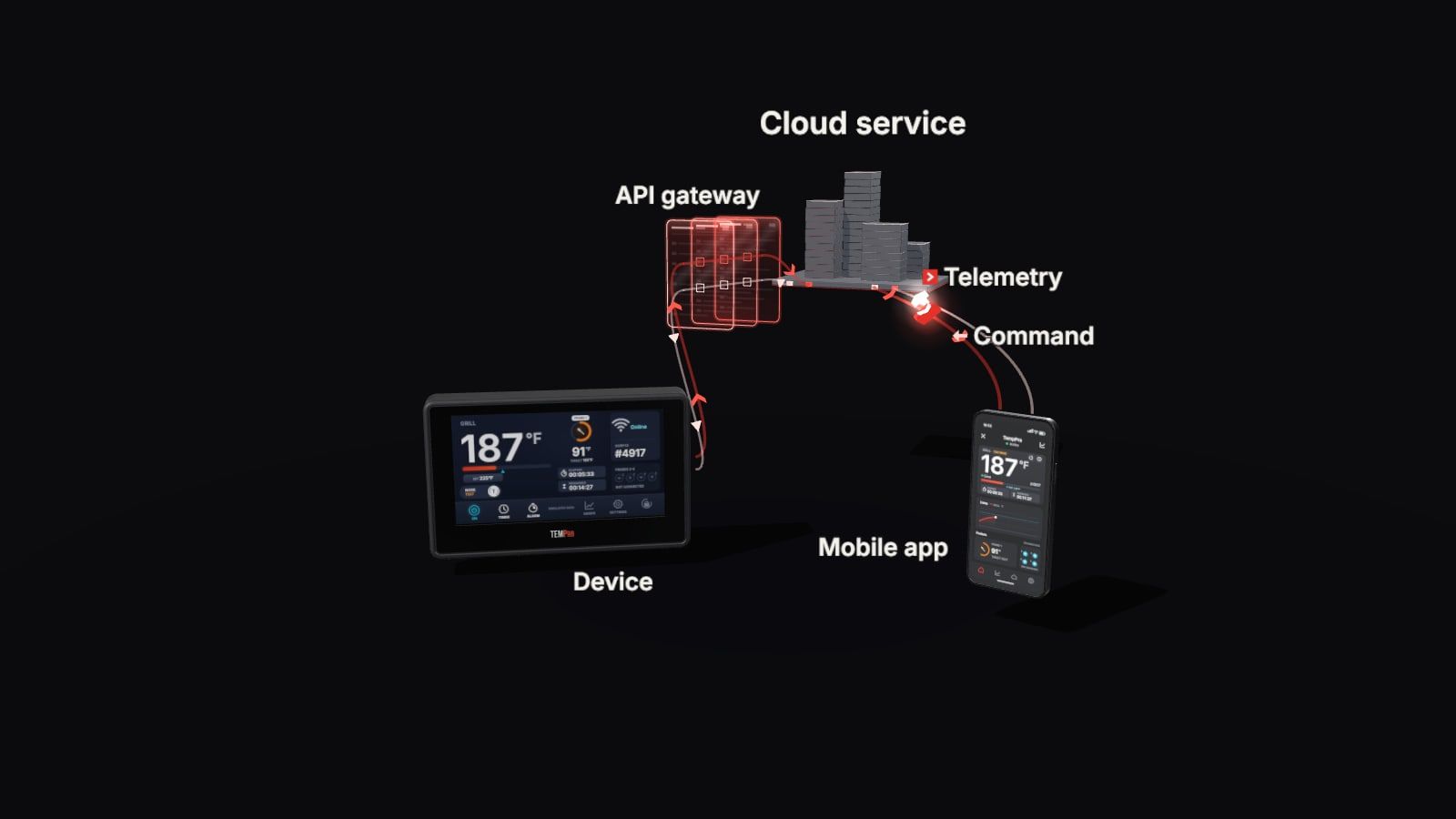
10 / Connected-system testing
Test the whole conversation.
Product to cloud to mobile. And back, including interrupted connections.
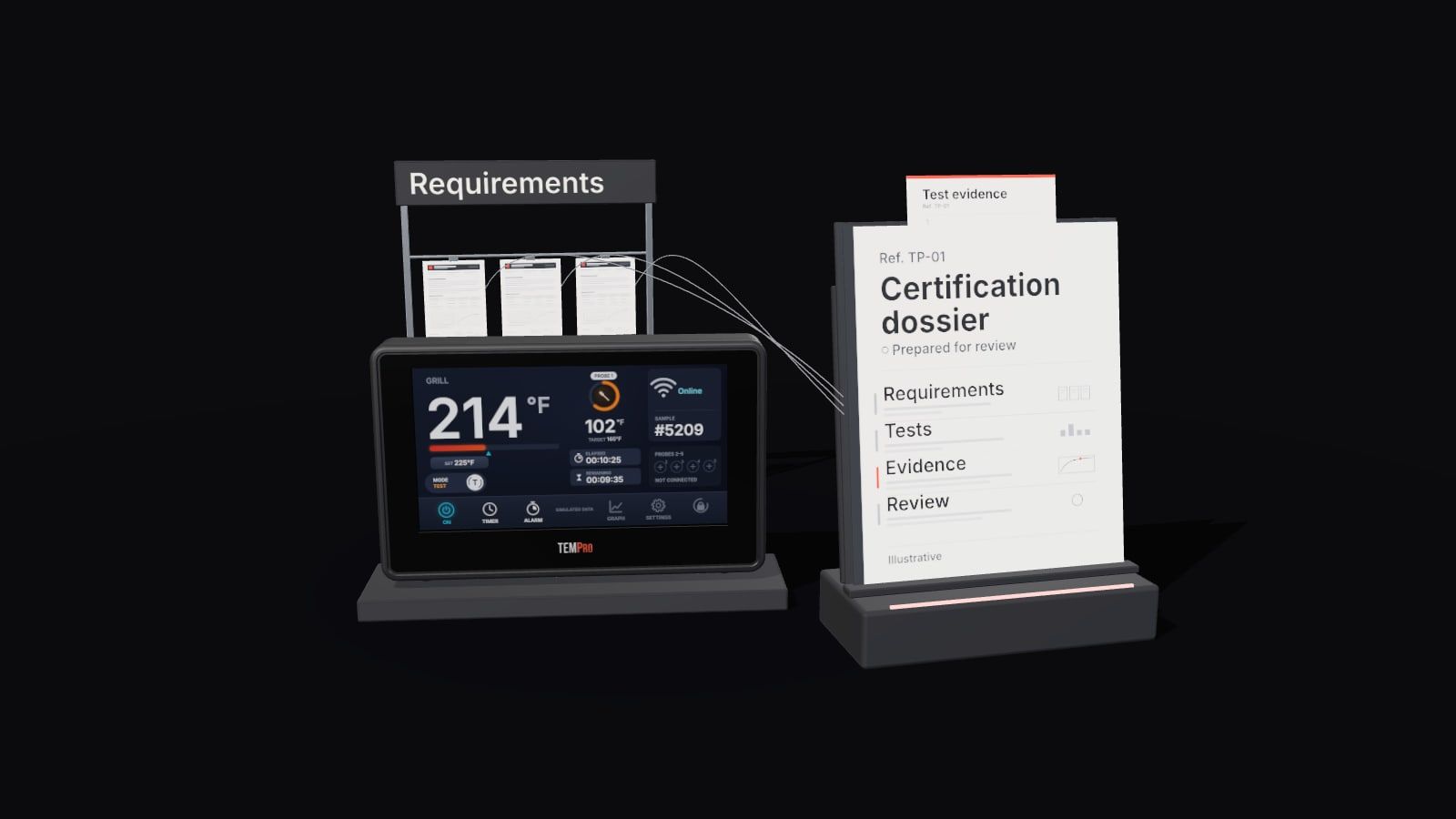
11 / Certification process
Prepare the evidence.
Applicable requirements, testing, technical documentation, and review.
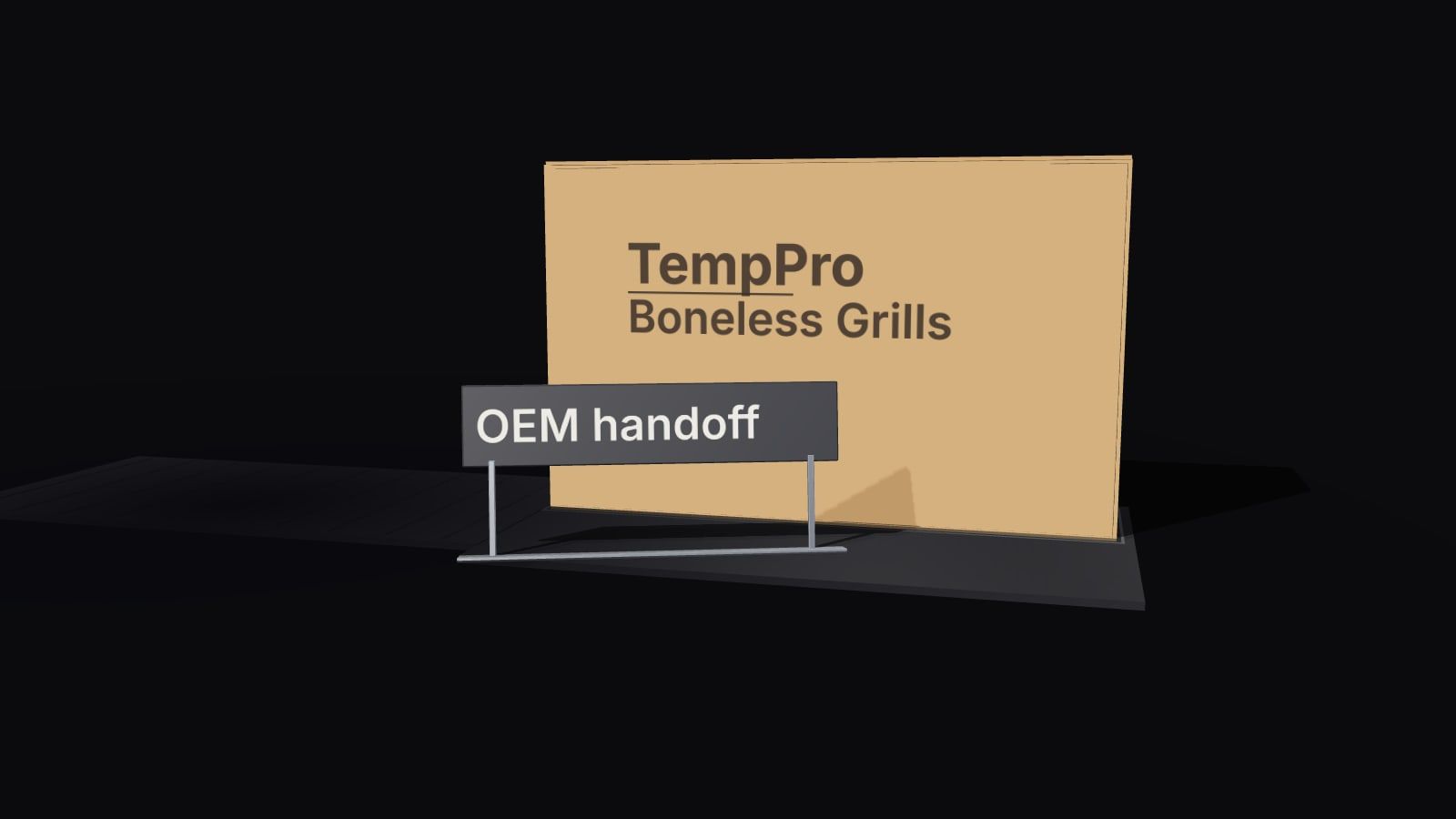
12 / OEM handoff
From the first brief to your product line.
Hardware, documentation, and an agreed OEM handoff.
Illustrative engineering journey · Approximate TempPro 3D model · Simulated data
Experience & strengths
Built on real products. Connected across every layer.
Boneless Grills develops its own physical products and connected systems for manufacturers. Our experience spans custom electronics, firmware, mobile apps and cloud services, bringing the device and its digital experience together as one product.
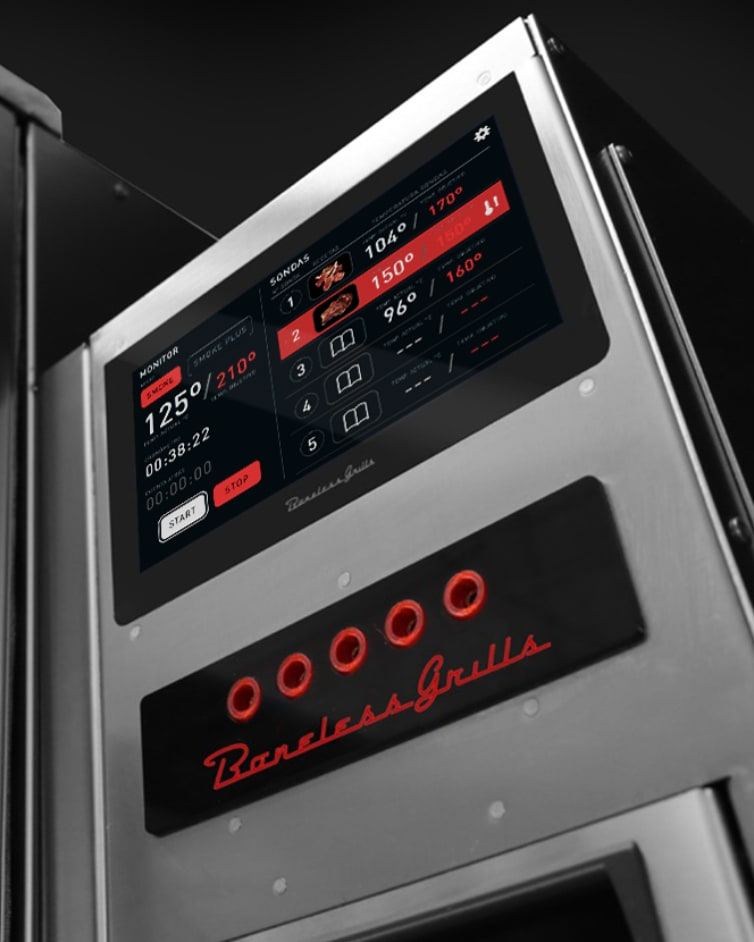
Product decisions before component choices
We help define requirements, control logic and the technology a product needs. That gives electronics, software and interface development a shared direction before prototyping begins.
Hardware and software, designed together
Our team has designed its own boards, software, apps and cloud systems. We understand the connections between them: how a physical control behaves, what the device reports, and how a user interacts with it remotely.
Our own products. Your manufacturing project.
Our product portfolio shows what we have developed ourselves. Alongside it, we work with manufacturers on their products, supporting a specific development stage or connecting the work across electronics, prototypes, software and integration.
Hands-on experience in electronic gas valve control and in connected cooking products informs the way we approach sensing, control and connected-product development in other sectors.
Where it solves a defined problem, we can scope AI features alongside the device, app and cloud architecture, with data needs, operating limits and human oversight agreed for the project.
Gas appliances
Electronic Gas Valve Control for Manufacturers
Custom engineering for gas grills, pizza ovens, teppanyaki griddles, ovens, industrial processes and other gas equipment, whether it is a new model or an existing range you want to modernize.
More on gas valve control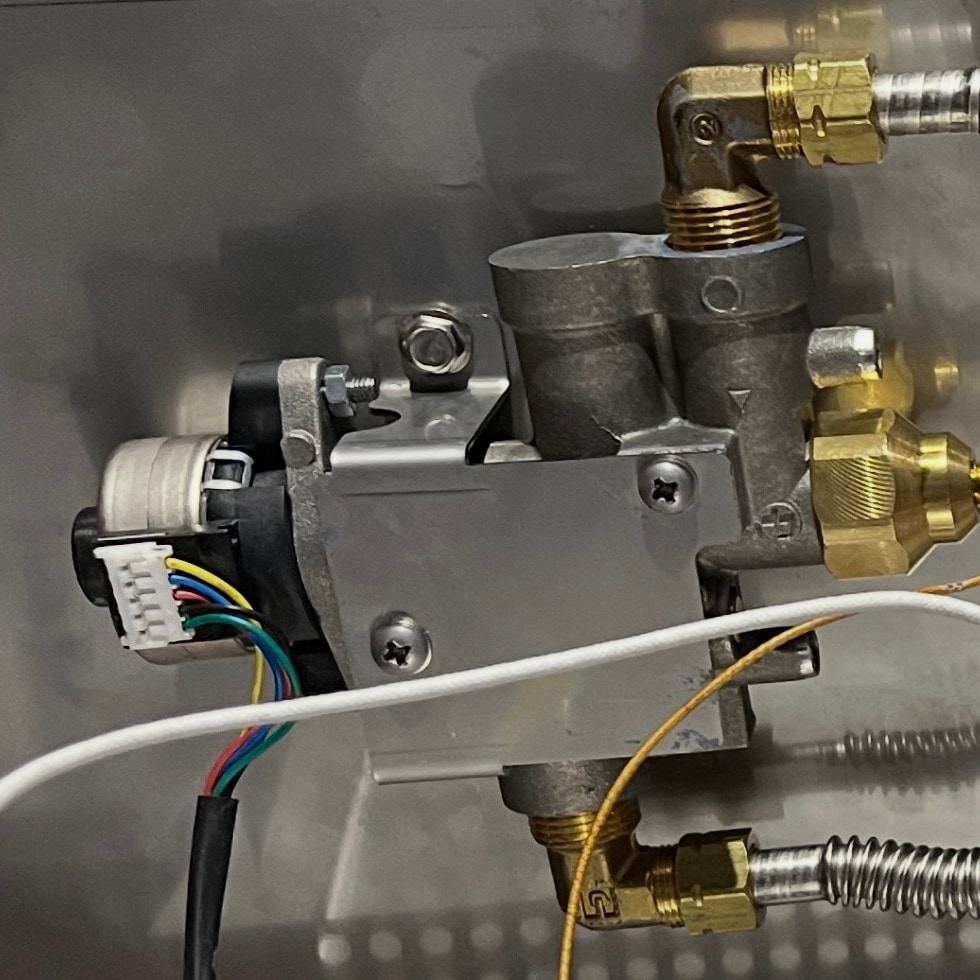
From gas grills to industrial processes
Gas grills, pizza ovens, teppanyaki griddles, ovens or process heating: each project starts from the actual equipment, its valve and burner system, how it is used and the functions the manufacturer wants to offer.
New models and existing ranges
We can design valve control into a new product, or help modernize an existing range, adapting the control to the hardware already in production where that is feasible.
Open and close, or modulate the flame
Depending on the equipment, the scope can cover opening and closing the valves, or modulating the flame for finer control of the heat.
The appliance’s protections stay local
Protective functions such as flame supervision remain in the appliance or installation and keep working without the app, the internet or the cloud. The electronic control works within them, and remote commands must not bypass them.
Custom engineering for each appliance, not a universal kit. The safety assessment, testing and any certification or conformity work for the target market are defined in each project.
Boneless Grills · Connected product development
Useful connections, across product categories.
Boneless Grills develops its own products and custom projects for manufacturers. We bring together electronics, firmware, connectivity and digital interfaces to make equipment easier to use, monitor and maintain. When it adds real value, we can integrate AI too.